2026-10-19 ·
How North Texas Clay Soil & Heavy Rains Trigger Sewer Backups in DeSoto
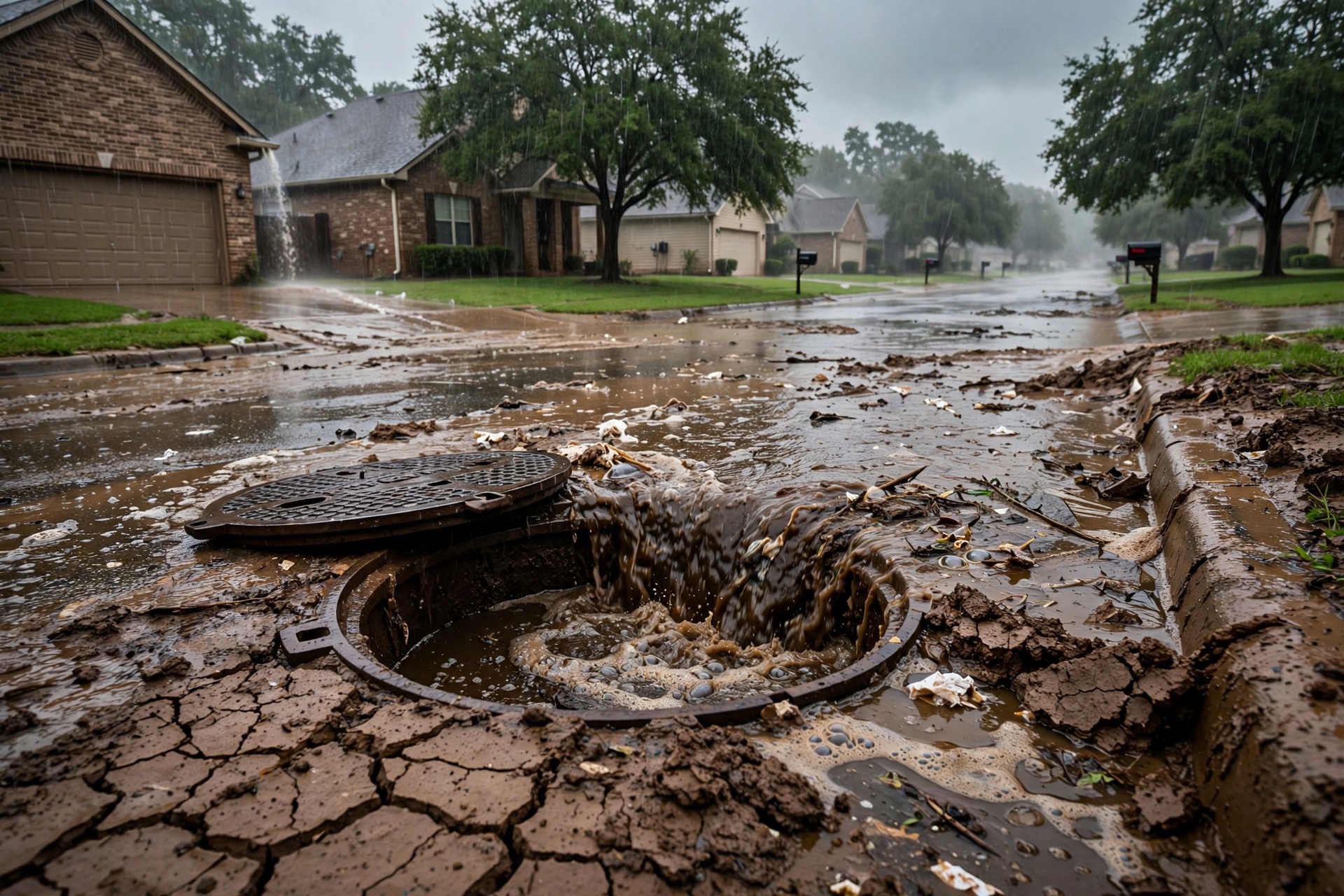
North Texas clay soil combined with heavy rains triggers sewer backups in DeSoto when moisture causes the ground to swell and place upward pressure on buried pipes, often cracking joints or collapsing sections in homes built before 1990. This ground movement occurs most in flat sections of Dallas County where drainage is slow and water pools near foundations for days after storms.
Clay Soil Behavior in Dallas County
Dallas County sits on heavy black clay that absorbs water rapidly during spring and fall downpours common to the humid subtropical climate. When the clay takes in moisture it expands up to 30 percent in volume, lifting and shifting sewer laterals that run from houses to the main line. In North DeSoto and Downtown DeSoto many homes rest on these soils with cast-iron or clay pipes installed 40 to 60 years ago that already show corrosion. The repeated wet-dry cycles crack bell joints and allow roots to enter, narrowing the pipe until backup occurs. Homeowners near Moseley Park notice the effect first because the low-lying terrain holds water longer, keeping the clay saturated for weeks. This soil movement differs from sandy soils farther south in Cedar Hill, where drainage reduces pressure on lines.
Heavy Rain Patterns and Sewer Stress
DeSoto receives intense rainfall events that drop 3 to 5 inches in a single afternoon, especially during summer thunderstorms. Water infiltrates the soil around sewer pipes faster than the municipal system can handle, raising the water table and pushing sewage toward the lowest point in the line, usually the home's cleanout. Properties in the Hampton Road Corridor experience more frequent issues because older gravity lines were not designed for the increased runoff from nearby Duncanville and Dallas development. After two or three consecutive rain days the clay remains plastic and continues to move, reopening small cracks that allow inflow. The result is raw sewage entering basements or crawl spaces within 24 to 48 hours of the heaviest rain.
Local Housing Stock and Terrain Factors
Many DeSoto homes in DeSoto Central and along Belt Line District sit on slabs with sewer lines buried only 18 to 24 inches deep, placing them directly in the active clay zone. Tree roots from mature oaks near DeSoto Recreation Center seek the constant moisture around these shallow pipes, accelerating joint failure. Flat lots common throughout the area prevent natural runoff, so water stands against foundations and keeps the clay wet. In contrast, homes in Frost Farms on slightly higher ground see fewer backups because drainage moves water away faster. When pipes fail, wastewater backs up through the lowest fixture, usually a basement toilet or floor drain, spreading Category 3 black water across finished surfaces.
Response Steps After a Backup
First locate and close the main water valve to stop additional flow into the line. Next avoid contact with the wastewater and ventilate the space to reduce odor. Contact a local crew for sewer backup cleanup that includes extraction, disinfection, and drying. Technicians remove affected drywall up to 12 inches above the water line and apply antimicrobial treatments to prevent mold. For detailed guidance on handling raw sewage safely, review Category 3 Black Water: Why Raw Sewage Requires Professional Hazmat Extraction. Crews also inspect the line with cameras to identify the exact failure point caused by soil movement before repairs begin.
Long-Term Prevention in DeSoto
Annual camera inspections of sewer laterals help catch early cracks before heavy rains arrive. Homes in DeSoto Central benefit from backflow preventers installed at the cleanout to block reverse flow during storms. Replacing old clay or cast-iron sections with PVC or ABS pipe reduces future movement damage because the new material flexes slightly with the soil. Grading soil away from the foundation at a 6-inch drop over 10 feet keeps moisture from pooling near the line. These steps do not eliminate all risk in expansive clay but lower the chance of sewage entering living spaces during the next intense rainfall event.