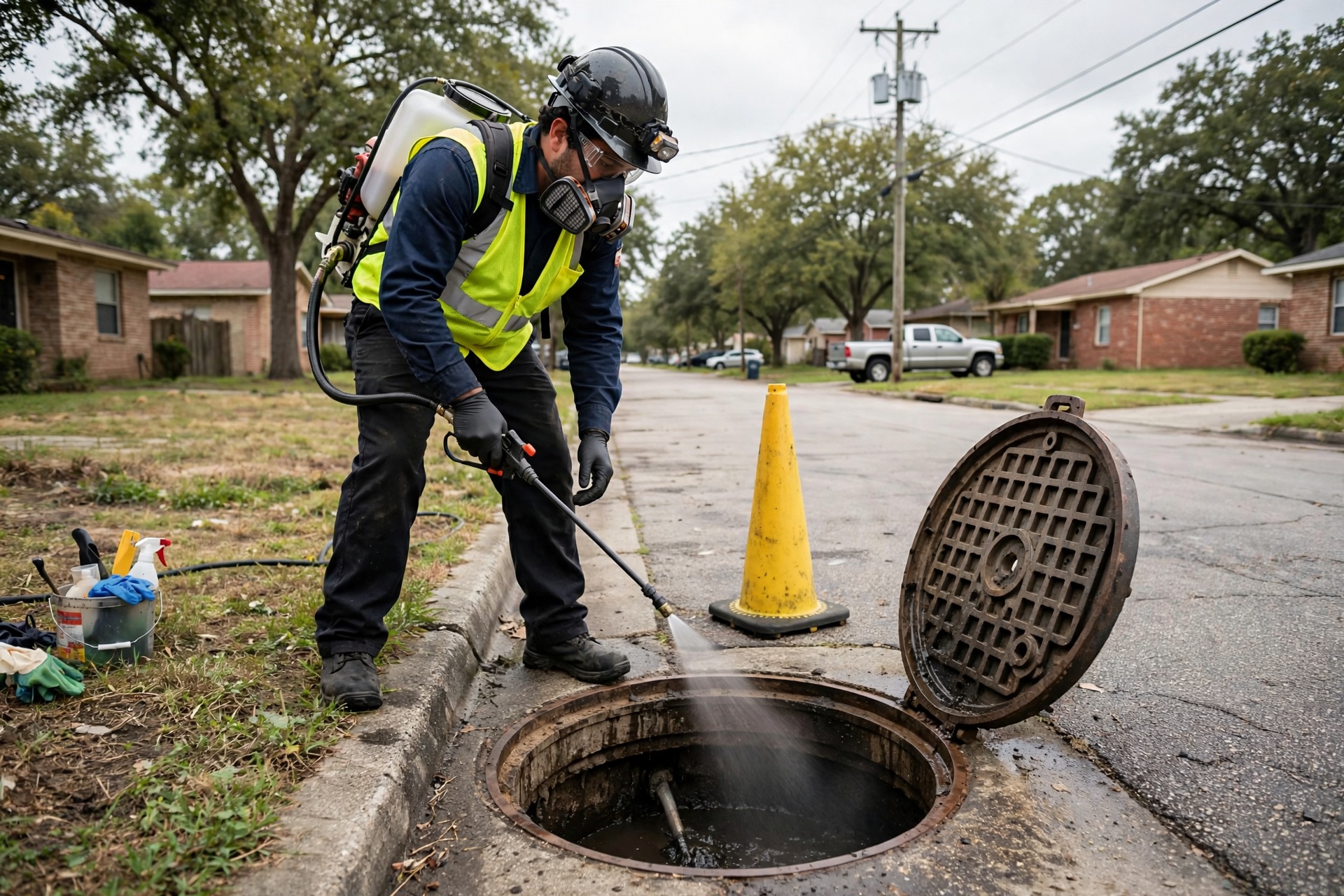
Hampton Road Corridor runs through central DeSoto with a mix of 1960s and 1970s single-family homes whose clay sewer lines sit close to the surface. Heavy summer downpours common in Dallas County push water into those older laterals, creating backups that reach kitchens and baths on N Hampton Road properties faster than in newer subdivisions. DeSoto Sewage Cleanup Co responds from its base at 917 N Hampton Rd with equipment sized for tight residential lots and narrow side yards typical along this stretch.
Mild winters here keep the ground from freezing, so crews can excavate year-round without extra shoring, yet the flat terrain means water pools quickly when mains surcharge. Residents between Downtown DeSoto and North DeSoto often see sewage rise after storms that also affect nearby Duncanville and Cedar Hill lines. The team works directly on these corridor streets, isolating the affected section and restoring flow before humidity accelerates odor and mold in the humid subtropical air.
Around Hampton Road Corridor
We regularly work near:
- 📍N Hampton Road
- 📍DeSoto Recreation Center
- 📍Moseley Park
- 📍Downtown DeSoto
Sewage Cleanup in Hampton Road Corridor — Local Notes
- •Homes along N Hampton Rd frequently have 4-inch clay laterals from the 1970s that crack under shifting Dallas County soils, allowing root intrusion and sudden backups after heavy rain.
- •Narrow driveways and mature trees on corridor lots limit equipment access, requiring smaller extraction units stationed at 917 N Hampton Rd for same-hour arrival.
- •Flat drainage grades near Moseley Park cause sewage to back up into yards before it reaches street mains, so crews pump from the lowest point first.
- •Hot summers increase indoor humidity after a spill, so technicians ventilate and dry affected rooms immediately to prevent secondary mold growth in these older homes.