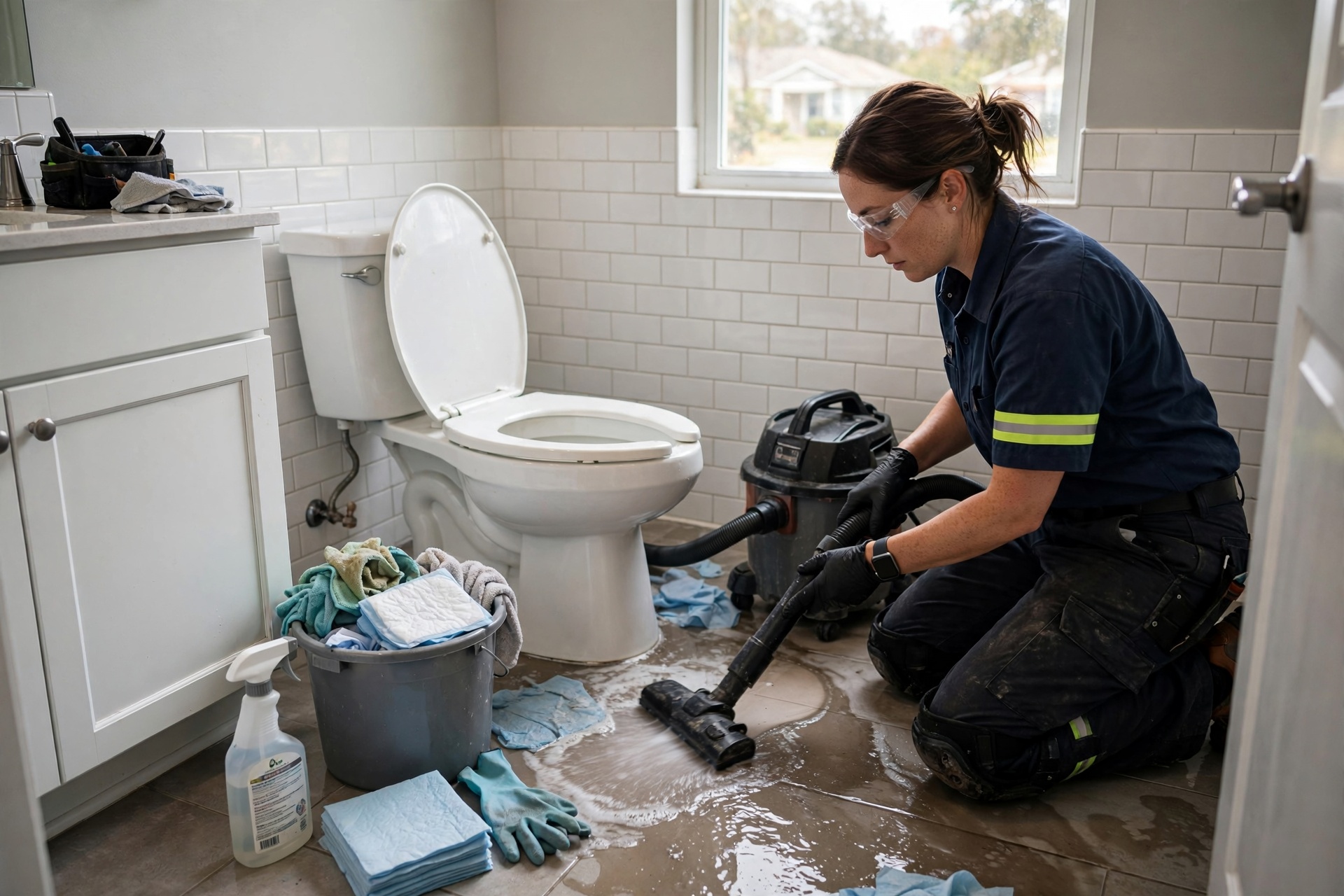
Toilet overflows in DeSoto often stem from aging cast-iron or clay sewer lines common in homes built before the 1980s in North DeSoto and around Moseley Park. Heavy subtropical rains push already stressed lines past capacity, sending contaminated water across tile and hardwood floors that absorb odors quickly in humid summers. Technicians must extract standing water within hours to prevent mold growth that thrives in Dallas County’s mild winters.
The work requires full PPE and EPA-registered disinfectants because toilet waste carries pathogens that can aerosolize during extraction. In homes near the DeSoto Recreation Center, we frequently encounter overflows that reach adjacent drywall cavities or subfloors, demanding moisture meters and targeted demolition rather than surface cleaning alone. Nearby cities like Duncanville and Cedar Hill share similar soil conditions where shifting clay exacerbates pipe failures.
Code compliance matters when overflows affect multiple units or cross property lines; Dallas County health rules require documented sanitization before reoccupancy. We document moisture levels and disposal manifests for insurance claims while restoring affected areas to pre-loss condition without unnecessary replacement of salvageable materials.
Seasonal patterns show spikes after spring storms when saturated ground prevents proper drainage, forcing backups through the lowest fixture—the toilet. Owner-operated crews familiar with DeSoto’s street layouts can reach jobs from 917 N Hampton Rd faster than out-of-town teams, reducing contact time with standing sewage.
Technician insight
In DeSoto the thing that catches most people out with toilet overflow cleanup is how fast water travels under 1960s slab foundations near Downtown when heavy spring rains hit; the clay soil holds moisture against the pipe joints, so what looks like a small puddle can mean saturated subfloor two rooms away by the time we arrive from 917 N Hampton Rd.
North DeSoto home after overnight rain
A toilet in a 1970s ranch backed up after a spring storm, sending waste across the bathroom and into the hallway carpet. Extraction revealed water had wicked under the slab edge into the adjacent bedroom subfloor. Crews removed baseboards, extracted liquid, disinfected all surfaces, and dried the structure over 48 hours so the homeowner could return without lingering odors.
Toilet Overflow Cleanup Services We Offer
✓Bathroom Floor Extraction
Removes standing water and contaminated waste from tile, vinyl, or hardwood after toilet overflow, preventing permanent staining and odor retention in humid DeSoto summers.
✓Subfloor Moisture Removal
Uses moisture meters and targeted drying to address water that has wicked into plywood or particleboard beneath bathrooms in older North DeSoto homes.
✓Biohazard Disinfection
Applies hospital-grade disinfectants to all contacted surfaces and air, neutralizing bacteria and viruses common in sewage backup events.
✓Drywall and Baseboard Removal
Cuts and disposes of saturated lower drywall and trim to stop hidden mold growth after overflows reach wall cavities.
✓Carpet and Pad Disposal
Extracts and properly disposes of saturated carpet and padding that cannot be salvaged following toilet waste intrusion.
Toilet Overflow Cleanup Cost in DeSoto, TX
| Service | Typical Range | What Affects It |
|---|---|---|
| Standard bathroom floor cleanup | $350–$650 | Single-room extraction and disinfection; rises with carpet or hardwood removal. |
| Overflow reaching adjacent rooms | $700–$1,200 | Additional extraction, wall base removal, and drying equipment. |
| Subfloor or drywall remediation | $900–$1,800 | Cutouts, disposal, and antimicrobial treatment required. |
Pricing confirmed on-site before work begins. Call 24/7 for immediate dispatch.
How it works
- 1
Arrival And Containment
Technicians arrive within the service area, set up containment barriers, and stop the source of the overflow before it spreads further into living spaces.
- 2
Water And Waste Extraction
Industrial vacuums and pumps remove all standing liquid and solid waste from floors and accessible voids.
- 3
Cleaning And Disinfection
Surfaces are scrubbed with appropriate cleaners followed by application of EPA-registered disinfectants and odor neutralizers.
- 4
Drying And Monitoring
Air movers and dehumidifiers dry remaining materials while moisture readings confirm safe levels before reconstruction.
Pricing
Cost depends on square footage affected, depth of penetration into subfloors or walls, and whether contents require disposal.