2026-10-19 ·
Commercial Sewage Floods: Health Code Compliance & Safe Business Reopening
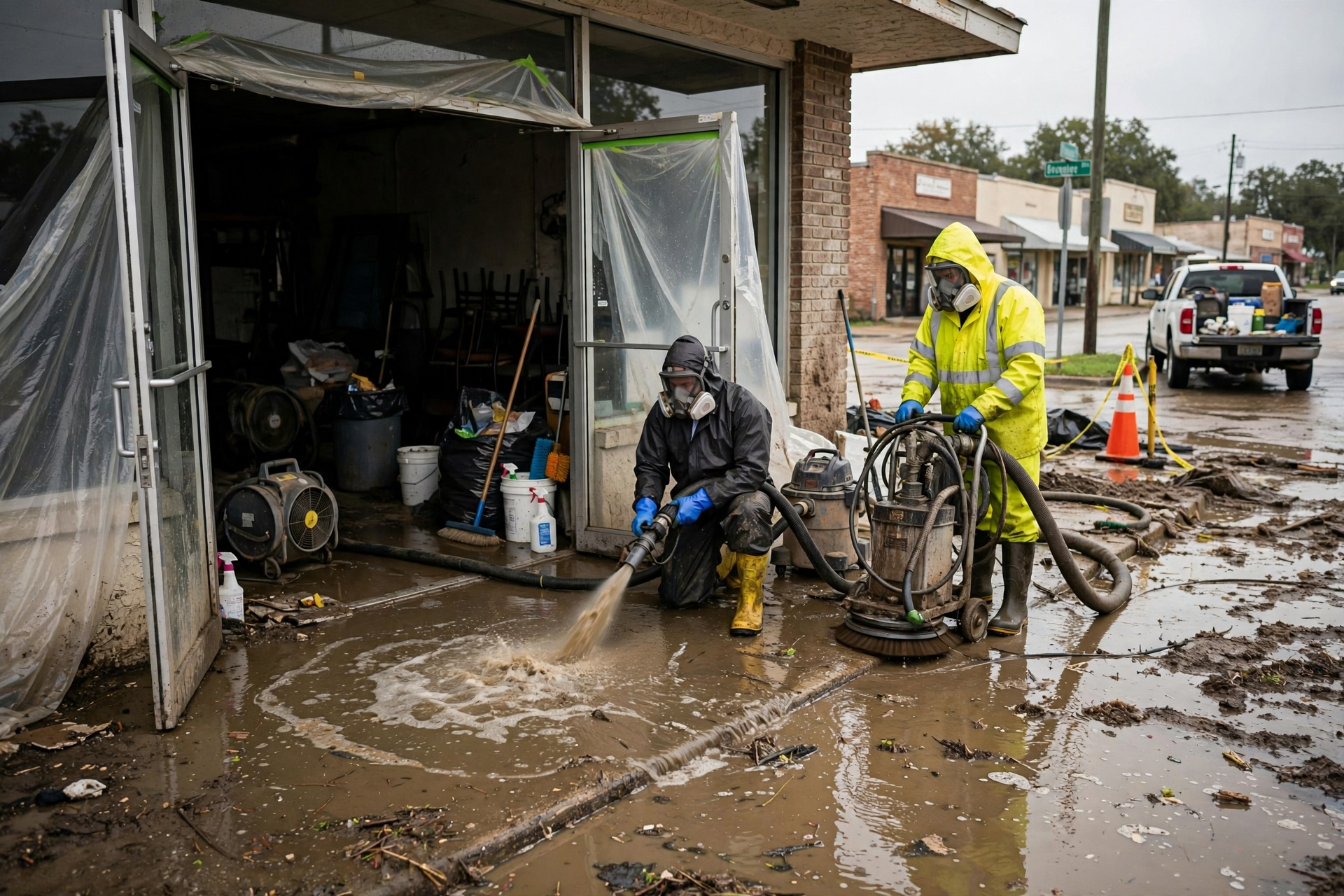
DeSoto businesses facing commercial sewage floods must complete Dallas County health department inspections and full Category 3 black water remediation before reopening, typically requiring 5–10 business days depending on affected square footage and material porosity. This process starts with licensed extraction crews removing standing waste, followed by moisture mapping and targeted demolition of saturated drywall or flooring. Owners who skip steps risk fines or closure orders from inspectors checking for residual pathogens in areas like Downtown DeSoto retail spaces or North DeSoto offices.
Dallas County Health Code Compliance Steps
Dallas County requires immediate notification to environmental health officials when sewage contacts food service areas or customer zones. Crews must document removal of all visible waste, then apply EPA-registered disinfectants to hard surfaces for the required dwell time. Porous materials such as carpet padding or acoustic tiles are removed entirely rather than cleaned. In humid subtropical conditions with frequent summer storms, inspectors pay extra attention to hidden moisture behind walls in older commercial stock near Moseley Park. Businesses that follow these protocols receive clearance letters faster, allowing owners to resume operations without repeated visits from county staff.
Extraction and Disinfection Protocols for Local Properties
Technicians begin by isolating the affected zone with containment barriers to prevent cross-contamination into unaffected sections of the building. High-volume pumps extract liquid waste, after which air movers and dehumidifiers dry the structure while HEPA filtration captures airborne particles. Commercial sewage cleanup teams then apply hospital-grade sanitizers to concrete slabs common in DeSoto strip centers along the Hampton Road Corridor. In properties near Cedar Hill or Duncanville, crews also address potential migration through shared sewer lines that serve multiple tenants. Final verification includes ATP swab testing to confirm bacterial reduction below county thresholds.
Safe Reopening Checklist After Sewage Events
- Obtain written clearance from Dallas County environmental health.
- Replace all removed structural materials with new, code-compliant products.
- Reinstall HVAC filters and verify no odors remain in ductwork.
- Schedule a post-remediation walkthrough with your insurance adjuster.
- Maintain detailed photos and moisture logs for future audits.
These steps protect both employees and customers while satisfying local regulations in commercial buildings throughout DeSoto.
Local Climate and Infrastructure Factors Affecting Recovery
DeSoto’s clay-heavy soils and sudden heavy rains often worsen commercial backups by overwhelming aging municipal lines that serve properties near the DeSoto Recreation Center. When summer humidity stays above 70 percent for weeks, drying times extend and mold risk rises inside slab-on-grade structures common along Belt Line District corridors. Category 3 Black Water: Why Raw Sewage Requires Professional Hazmat Extraction explains why DIY approaches fail these conditions. Owners who partner with crews familiar with North Texas clay movement and 24-hour rainfall patterns finish remediation with fewer callbacks and meet reopening timelines more reliably.