2026-10-19 ·
Emergency Septic Tank Backup Protocol During Severe Storms
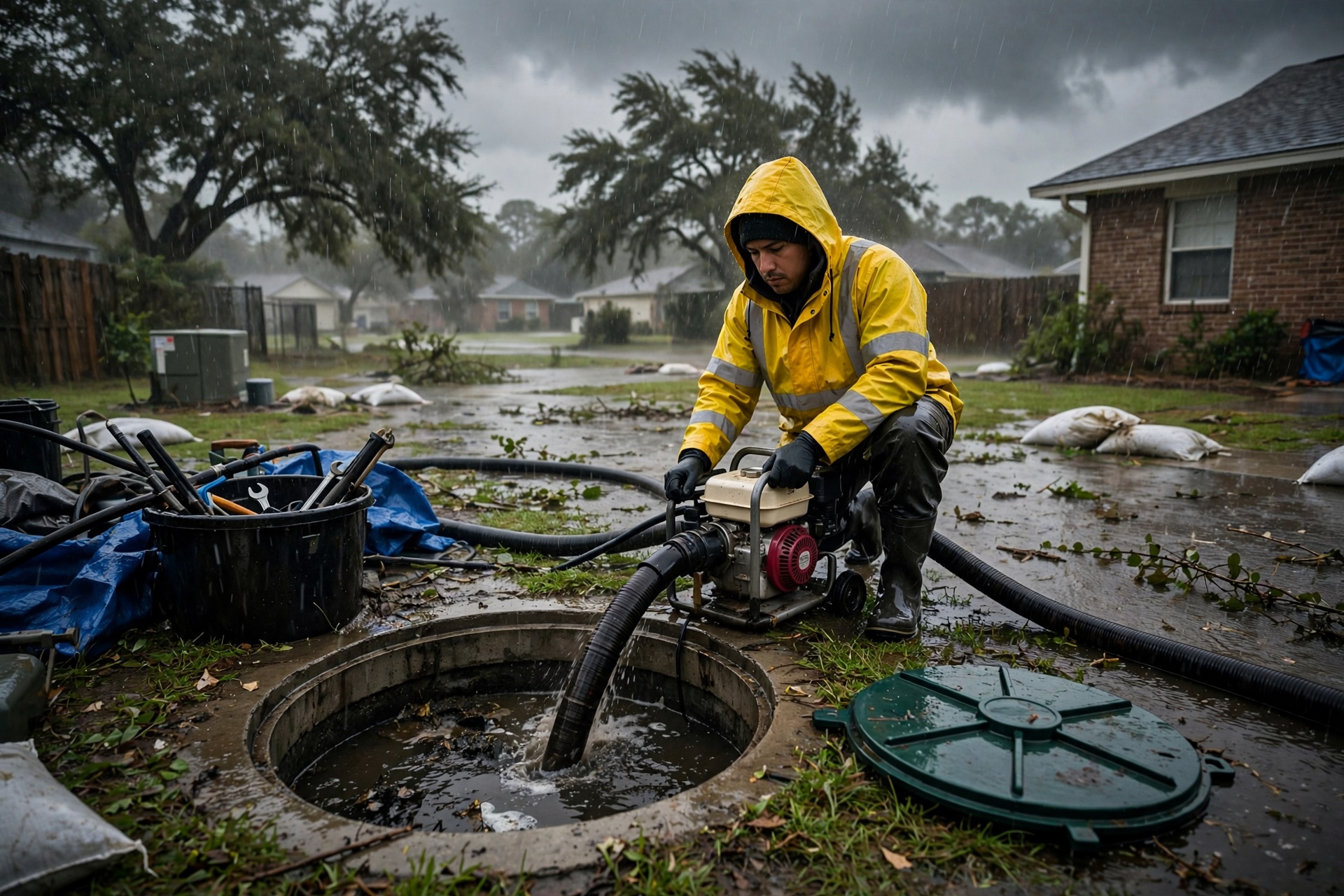
During severe storms in DeSoto, the immediate protocol for a septic tank backup begins with evacuating the home, shutting off water sources, and avoiding all contact with the wastewater to prevent exposure to pathogens. Dallas County's heavy downpours saturate the ground quickly, pushing effluent back through lines in older homes found in North DeSoto and Downtown DeSoto.
Immediate Safety Measures
Evacuate all occupants, especially children and pets, from affected rooms and seal off the area with plastic sheeting and tape. Turn off the main water supply at the meter to halt additional flow into the tank. Wear waterproof boots, gloves, and an N95 respirator if entry is unavoidable for shutting valves. Document the water line with photos from a safe distance before leaving. In DeSoto's humid subtropical climate, standing wastewater creates rapid bacterial growth even in mild winters, so professional assessment should occur within hours rather than days.
Assessing Storm-Related Backup Causes
Inspect the tank lid and drain field from outside for overflow signs such as soggy ground near the leach lines or gurgling toilets. Heavy rains in Dallas County cause clay soils to expand and reduce absorption, a common trigger in neighborhoods like North DeSoto near Moseley Park. Check cleanouts along the line for blockages before assuming tank failure. Note any recent pumping history or tree root intrusion common in older DeSoto housing stock. How North Texas Clay Soil & Heavy Rains Trigger Sewer Backups in DeSoto explains these soil dynamics in detail for residents in areas such as the Hampton Road Corridor.
Extraction and Containment Steps
Once professionals arrive, they pump the tank and flooded areas using truck-mounted extraction equipment rated for black water volumes of 500 gallons or more. Contain the spill with absorbent barriers to prevent migration toward nearby properties or the DeSoto Recreation Center drainage. Remove saturated flooring and drywall within 24 hours to limit structural damage. Pump intervals during storms may need to occur every 6-12 months instead of the standard 3-5 years for homes in Cedar Hill and Duncanville border zones. septic backup cleanup teams follow these containment sequences on properties throughout DeSoto.
Disinfection and Drying Protocol
Apply EPA-registered disinfectants to all hard surfaces after extraction, focusing on a 10-minute dwell time before rinsing. Deploy commercial dehumidifiers and air movers to reach 50 percent relative humidity within 48 hours. Monitor moisture meters on subfloors and wall cavities in homes built before 1990 that dominate Downtown DeSoto. sewage disinfection and sanitization prevents cross-contamination into HVAC systems common in single-story ranch homes here. Follow up with ATP swab testing to verify bacterial reduction below 100 RLU.
Post-Storm Monitoring and Prevention
Reinspect the drain field 48 hours after the storm passes for continued seepage, especially after multiple rain events in a single week. Install backflow valves on main lines in properties near Belt Line District where elevation changes increase risk. Schedule annual inspections before hurricane season begins in June. How Fast Can Dangerous Mold Form After a Wastewater Overflow? details the 24-48 hour window for mold colonies in DeSoto's humidity levels. Maintain records of each storm event to identify patterns in your specific system.