2026-10-19 ·
Structural Drying & Dehumidification: Preventing Hidden Subfloor Rot
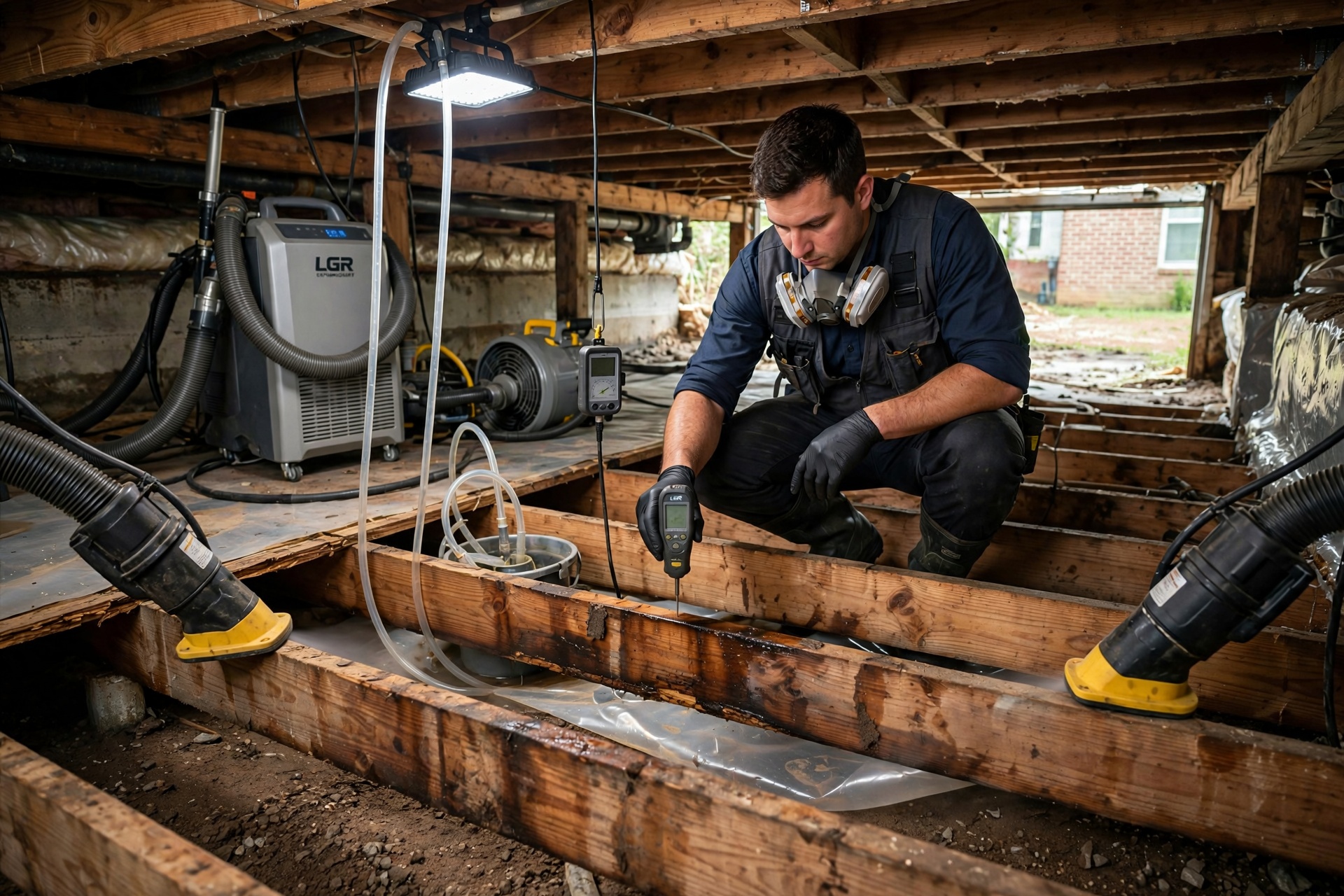
Structural drying and dehumidification after sewage backup removal in DeSoto takes 3–7 days of continuous equipment operation to prevent hidden subfloor rot when moisture levels stay above 16% in wood framing. Dallas County homes built on expansive clay soils often trap water beneath slabs and crawl spaces, especially in neighborhoods like North DeSoto and Downtown DeSoto where many properties date to the 1970s and 1980s with pier-and-beam construction. Hot summers and high humidity slow natural evaporation, so professional extraction must combine air movers, dehumidifiers, and moisture meters to reach safe readings below 12%.
Why Subfloor Rot Develops After Sewage Events
Sewage backups introduce water that migrates under flooring and into subfloor joists, where it remains undetected for weeks. In DeSoto’s humid subtropical climate, mild winters keep soil moisture high year-round while heavy rains in spring saturate the clay that underlies most lots near Moseley Park and the DeSoto Recreation Center. This combination keeps relative humidity above 60% indoors, allowing mold and wood-decay fungi to colonize subfloors within 48–72 hours. Homes along the Hampton Road Corridor face added risk because older plumbing lines crack more often, sending contaminated water directly into crawl spaces. Without immediate structural drying and dehumidification, joists lose structural integrity and require full replacement at costs that exceed $4,000 in a typical 1,800-square-foot house.
How Clay Soil and Local Weather Change Drying Needs
North Texas clay expands when wet and contracts when dry, creating gaps that let sewage migrate farther under slabs than sandy soils would allow. After a backup near Cedar Hill or Duncanville borders, technicians must run industrial dehumidifiers at 30–40 pints per day capacity for each 1,000 square feet to counteract the constant moisture vapor rising from the ground. Summer temperatures above 95°F increase evaporation rates but also raise indoor humidity, so equipment must run 24 hours without cycling off. In contrast, the milder winters around 45–55°F allow slower but steadier drying if air movers keep airflow across every joist. Monitoring with pin meters every 12 hours confirms when subfloor moisture drops below the rot threshold.
Practical Steps for Structural Drying and Dehumidification
Technicians begin by extracting standing water with truck-mounted pumps, then place air movers at 45-degree angles along walls and under subfloors. Desiccant or LGR dehumidifiers follow, sized to the square footage and current grains-per-pound readings. In pier-and-beam homes common in Downtown DeSoto, crews often cut small access points to install drying wands that reach the center of each bay. Daily logs track temperature, humidity, and wood moisture content until all readings stabilize for 48 hours. This process directly supports structural drying and dehumidification after initial sewage backup cleanup.
When to Call for Professional Extraction and Drying
Homeowners notice musty odors or soft spots near toilets and laundry areas first. Any sewage event involving Category 3 water requires immediate black water cleanup followed by drying to avoid long-term rot. Properties in Thorntree or Frost Farms that sit lower than surrounding streets see water pool longer, extending drying times by 2–3 days. Consistent equipment use and documentation protect both the structure and future resale value.